Scroll or use the arrow keys to move through the project sections. Press Escape to return to the selected projects.
Research · HiMCM 2024 Finalist
To Play or Not To Play: Modeling Future Olympic Games
How should the Olympics decide the sports to add in future programs? Our team built PARIS, a quantitative model evaluating 41 sports through public opinion and government priorities, then forecasts which events best fit the 2032 Brisbane Games.
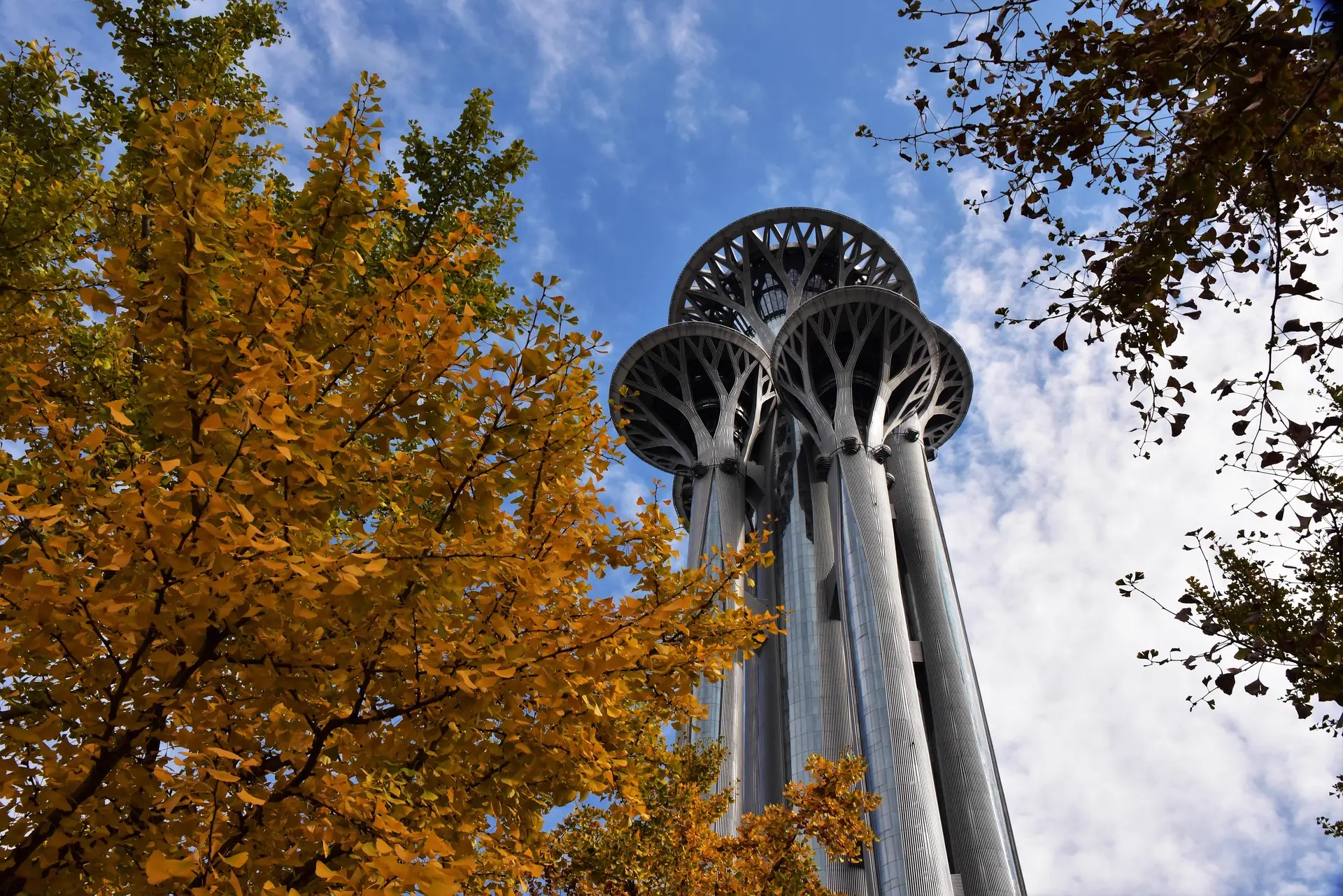
Selecting tomorrow's Olympic sports
Sports enter and leave the Olympic Games as the audience and host cities change.
The International Olympic Committee considers broad criteria ranging from popularity and accessibility to sustainability, innovation, gender equity, inclusivity, and safety. PARIS measures these criteria in 12 factors, then combines public opinion with government priorities to score each candidate.
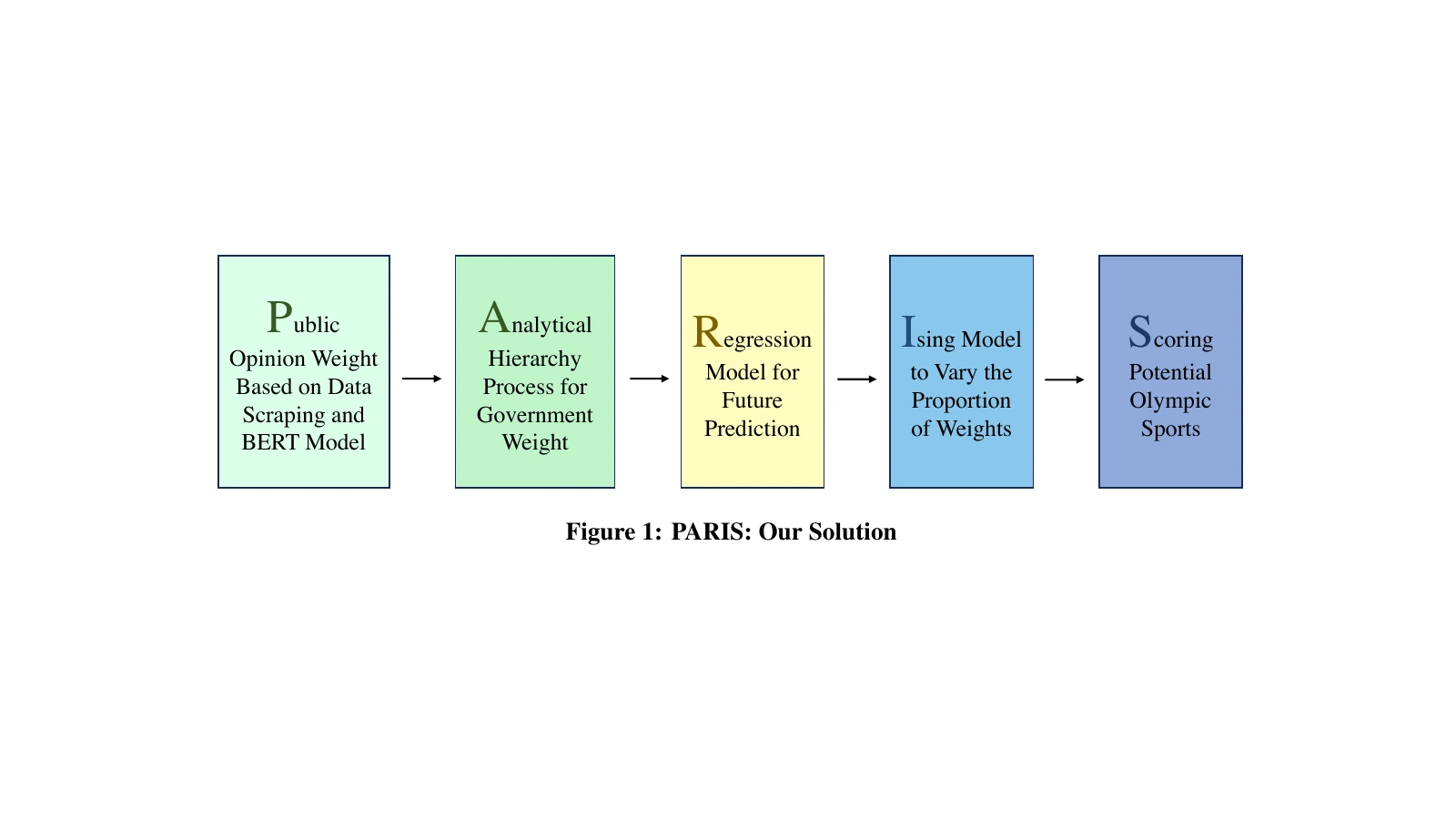
PARIS begins by using BERT to measure how closely social media discussions relate to each factor. AHP estimates government priorities from policy research. Regression projects how both sets of weights change over time, while an Ising model adjusts their relative weights.
- 41
- We evaluated 41 sports, including established Olympic events and potential candidates.
- 12
- 12 measurable factors cover public interest, access, sustainability, inclusion, and safety.
- 3 Games
- The model was validated against Olympic program decisions across the 2020, 2024, and 2028 Games.
- ±2%
- Input changes of up to ±2% produced only slight score adjustments during sensitivity analysis.
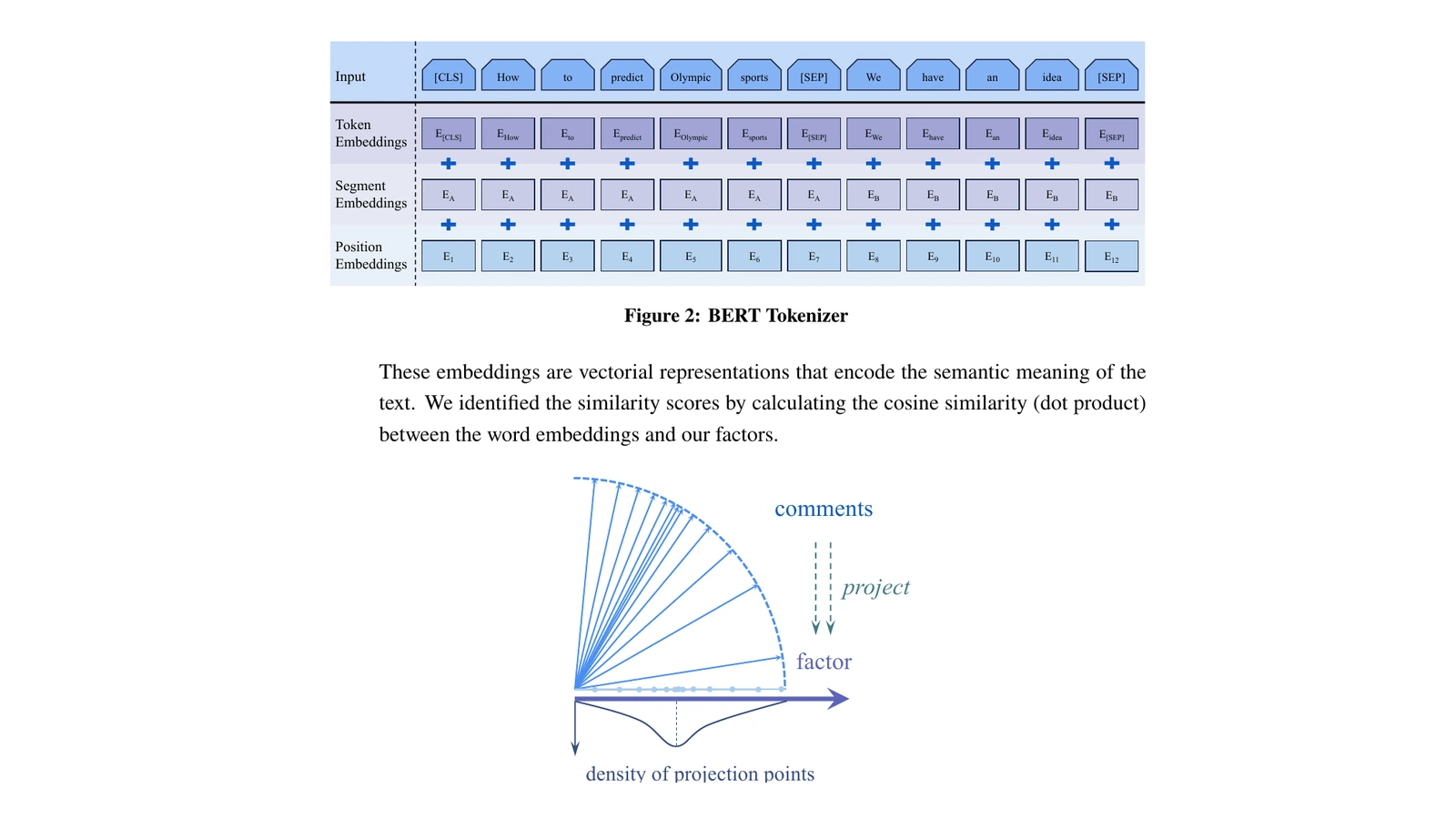
Public opinion weights came from Olympic discussions on Reddit and Twitter. BERT embeddings and cosine similarity measured how strongly each comment related to the 12 factors.
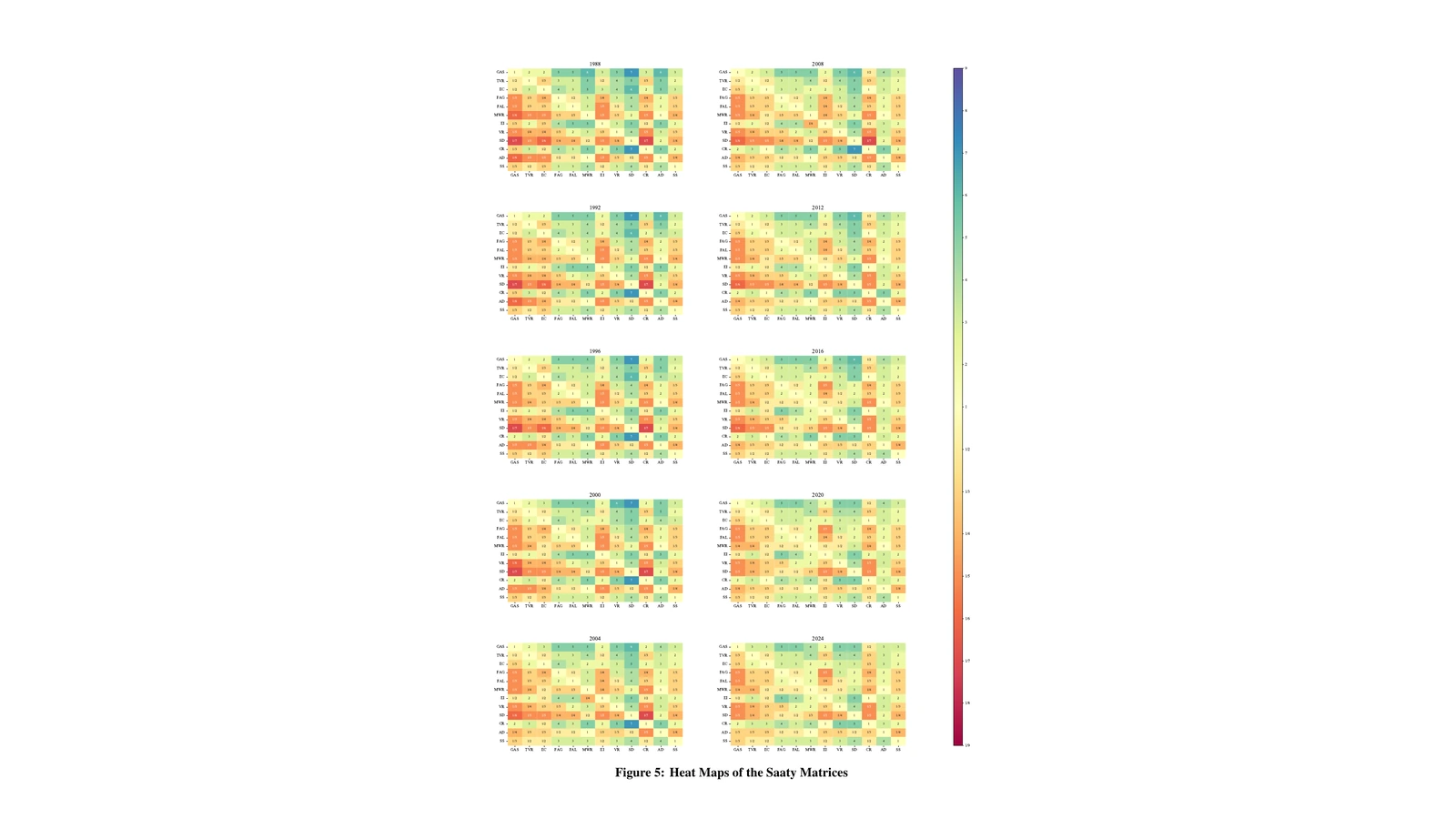
Government weights came from 12 × 12 AHP comparison matrices informed by policy research and historical events.
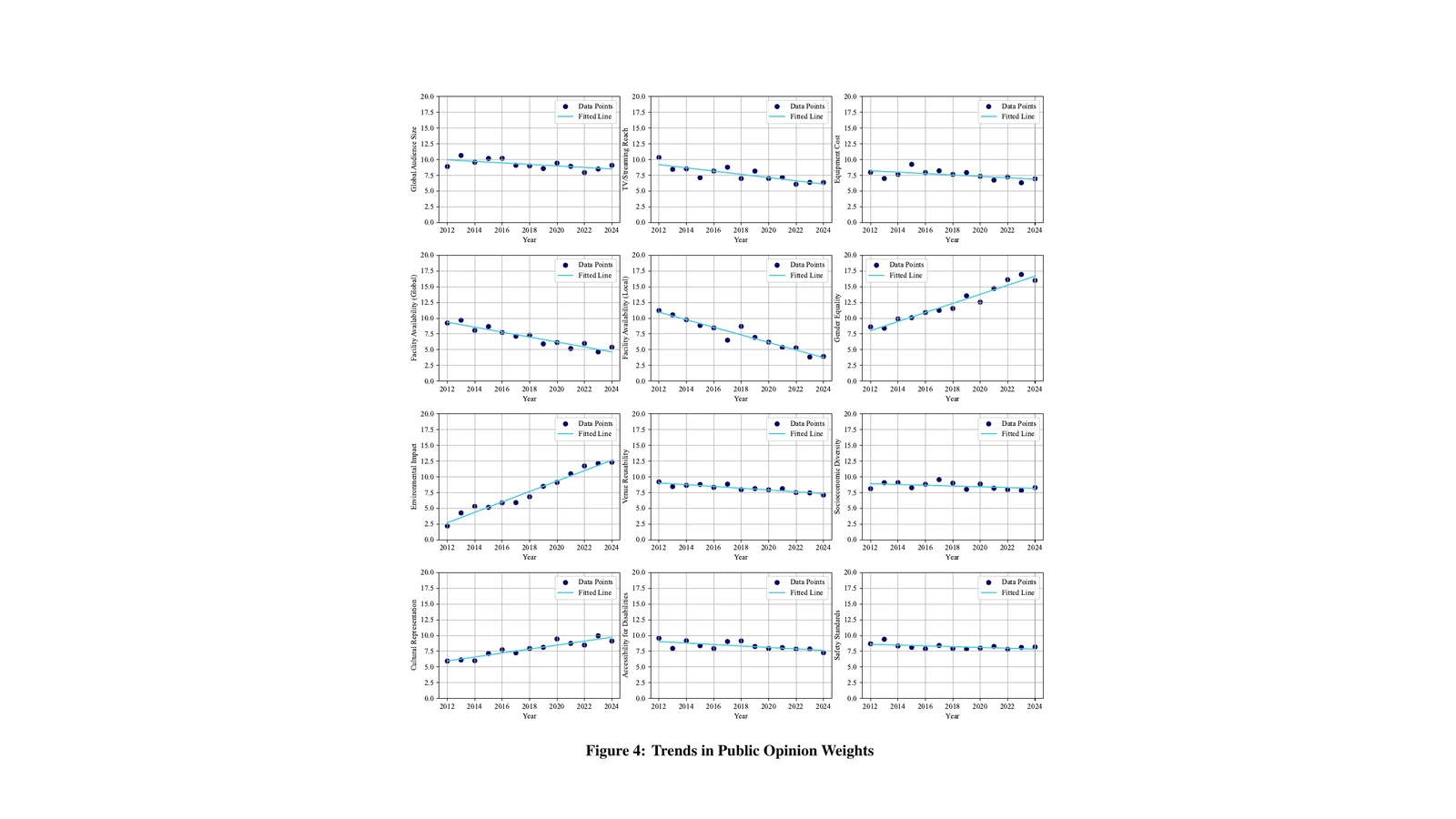
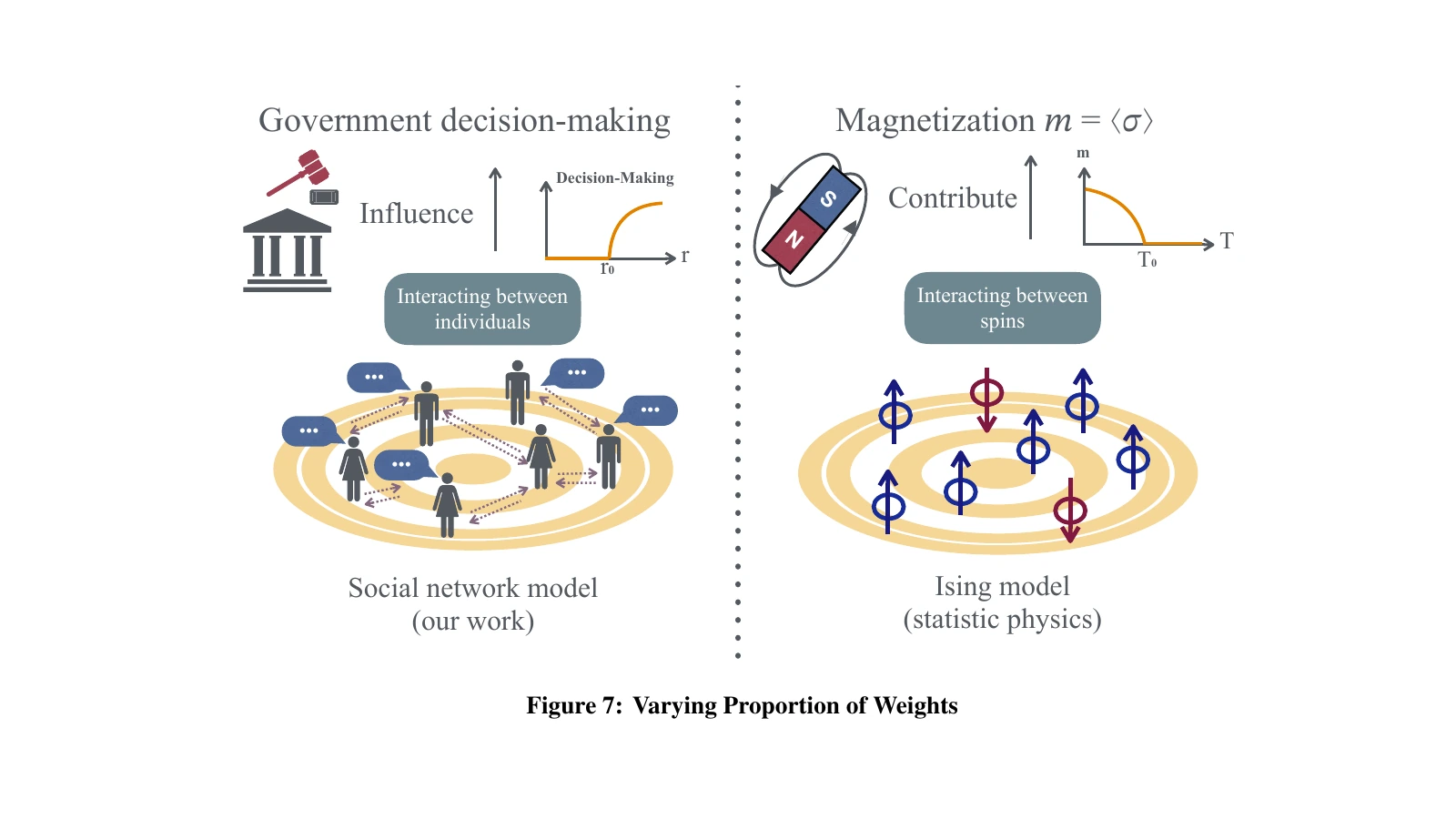
Regression captured changes in each factor over time. An Ising model adjusted the balance between public influence and government decisions as social participation varies.
The model validated recent Olympic decisions.
For 2020, all six newly included sports ranked among the top eight candidates that had been absent from the previous Games. For 2024, breaking ranked second among previously excluded sports.
For 2028, cricket ranked sixth overall, while flag football placed among the leading candidates at nineteenth. Football, basketball, swimming, athletics, and cycling consistently remained within the top 10 across different years and host countries.
Selected as a HiMCM 2024 Finalist in the top 5% of 1,055 teams, our solution was one of 11 finalist papers featured for outstanding model development and the only featured paper recognized as an "exceptional example" of AI use.
Read Judge Comments